Let’s be real for a moment.

Let me be really honest with you.

This community conversation effort is one of the most fulfilling projects I’ve ever been involved with. I believe in the groups and find them cathartic. The support I’ve received and enthusiasm for the effort blows me away, and I’ve had amazing conversations with people in my network about how to build them. I’m excited about the possibility of adding additional activities and opportunities to connect with art and nature and even do retreats!

But I have one big, perpetual challenge in bringing them to fruition.

For whatever reason, people heartily cheer from the sidelines and then don’t register for the events. People don’t seem to believe that these sessions are for them.

Some people are intimidated by the weight of the subject. But they haven’t seen the lightness that people walk out of these rooms with. Ultimately, the events feel like a wellness activity that leaves people smiling, laughing, relaxed, connected and inspired. We’re countering the weight, not basking in it.

Some people don’t want to talk about what they’ve been through. I get that. But it’s not school. You’re welcome to come and listen!

Some people care a lot, but aren’t directly affected. To these people I say we still need problem solvers, workers, concern and support.

And what is there to gain from all of this?


1) First, wellness. Skill-building. As a caregiver, I work regularly with anxiety and grounding techniques that have been transformative. I want to share what I’ve learned, because we are continually dealt blows. I want us to be ready for them as they come.


2) Connection to community. Community is bigger than us. It spreads the load on our shoulders across multiple backs. It allows us to care and be cared for.


3) A sense of where we are and how we can survive and even thrive in this fast-changing environment. The occupational and political landscape today is unique, and we will need to find new ways to handle it. If we can dream it, we can build it!

I don’t know, ultimately, whether this idea will grow the way I dream. But I’d like to believe that we can build community networks to support each other, grow in innovative ways, stay ready, heal together, and be inspired together by our common passions for learning, for art, for a natural world that is bigger than us, and for a good common humanity that still exists beneath the surface of this plastic, unfeeling society.

I want to believe that we can build something beautiful together!

There are two upcoming events, one in-person and one online. We’re working on more, different types of events, focusing on individual topics, sharing about books, making art together, being in nature together and more.

In-person event:
Community Conversation: Finding our Footing in this Uncertain Time https://www.eventbrite.com/e/community-conversation-finding-our-footing-in-this-uncertain-time-tickets-1363624811519?utm-campaign=social&utm-content=attendeeshare&utm-medium=discovery&utm-term=listing&utm-source=wsa&aff=ebdsshwebmobile

Online event:

https://www.eventbrite.com/e/online-community-conversation-finding-our-footing-in-this-uncertain-time-tickets-1382445414449?aff=oddtdtcreator

Mailing list:
https://docs.google.com/forms/d/e/1FAIpQLSfrIlrlCJzm5E4ahoR_JOh6E-KaB1nbGyJ2SmdQqKL99JHrOQ/viewform?usp=header


Please, come join us. You’re welcome! Come as you are. Bring your baggage. Lighten your load. Find connection and inspiration. Believe in us.

Navigating Career Changes from the Inside Out

Years ago on this blog, I wrote about approaching career changes from the inside out. I had accomplished the biggest career change of my life that way, by following my passions with my books, talks and extra research sessions and then blogging about them here.

Last week at the annual AAPOR conference in St Louis, an attendee in a session about Navigating Career Change asked about feeling unsatisfied with their work. This is a common motivation for switching jobs, but I chimed in from the audience as a voice of caution.

“I think about it like an unscratched itch,” I advised. “Maybe there is some part of you that your work life isn’t satisfying. But this is a horrible time to switch jobs so I advise you instead to find other ways to scratch that itch. You may still decide you’re ready for a change, but if, for example, you decide that you really do need your job to offer more space for creativity, you now have recent experiences to speak to as examples of you pursuing your creative endeavors.”

We expect our jobs to be our calling, our everything. And we give them everything. But we are so many things, and we need to exist beyond our work.

I’m at another point of career change. After nearly 30 years of working in my career- with the longest break being 3 weeks of maternity leave, I’ve lost my job as a government contractor as part of the deep federal cuts. I could look directly for another position, but I want to take my time with it. We only live once, and I want to take inventory of all of my itches before deciding how to scratch.

I want to build out this Community Conversations initiative, but I want to be thoughtful about it. I’m not trying to recreate what others have done, so much as build something new that fits our current needs. This requires intuition, reflection, patience, resilience, and determination. It means that some days are among the most fulfilling of my life, hosting cathartic community sessions or having really inspiring conversations with friends and colleagues, and some days I wonder why I’m adrift instead of staying on the career path.

This initiative was founded from the inside out, reflecting 

  1. my facilitation skills that I’ve learned through years of moderating, facilitating and community work, 
  2. my passion for building mental health that was cultivated through voices like Iyanla Vanzant, Pema Chodron, Rachel Cargle and the Nap Ministry,
  3. my profound interest in community based participatory research and the principles that guide it, and
  4. my love of strategic conversations, brainstorming and forming new ways to approach problems.

Forming an initiative from the inside out means that guiding our next steps is a continual process of self reflection. This means that a day spent at one of my favorite art galleries, taking pictures that I may able to use for an exhibit of my own one day, getting lost in the woods on its campus and finding new ways to engage with my surroundings is just as important as a day spent documenting the plan for the initiative, including the financial and communication aspects.

I always imagined my life in chapters, with a later chapter as a more wholeheartedly creative era. And I love the creativity I’m feeling now! But a change so dramatic as this requires some careful stewardship and navigation.

I’m not really sure where any of this is headed, but I’m confident that just as when I recreated my life before, these steps will lead me in the right direction. Because I’m scratching my itches!

Have you navigated big changes like this? Do you have unscratched itches? Do you have any advice or resources to offer? Please comment! Let’s continue the conversation.

Picture taken by me, in the grounds of the Glenstone Museum in Potomac, MD 5/22/2025

The Role of Gratitude in Research

Research, as most things in life, is best approached with gratitude. In this post, I’ll share a bit about what I’m grateful for, an exercise in gratitude, and some food for thought about the role of gratitude in research.

First, here is a window into what I’m feeling grateful for.

Grateful for the challenge of research

Research can provide a challenging career. While it is possible to find positions in research that are more repetitive, most positions afford many opportunities for learning about new subject matter and new methods. Each new research question provides fresh challenges to implement. And with the body of literature and informal sources available, there is always the ability to read more deeply about the work that others have done. I am grateful for the perpetual learning experiences that research has brought.

Grateful for the versatility of research

One of my favorite aspects of a career in research is the versatility. I’ve been able to work in neuropsychology, physics education, sociolinguistics, social media research, media measurement and in public health using a great variety of research methods.

Grateful for my colleagues

Over the years I’ve had the pleasure of working with people that I respect, learn from and genuinely enjoy. I’m grateful for their help, their wisdom, their curiosity, their enthusiasm, their support, their friendship, and their comforting awkwardness.

Gratitude for the research opportunities

I am grateful for the opportunity to study people. I am grateful for the people who agree to participate in research and who honestly share what is in their hearts or on their minds. Some opinions and experiences are easier to share than others. I am grateful for all of it. The qualitative work that I am currently involved with is often built on individual and group interviews that can be a powerful experience for the participant and the interviewer, and I am so grateful to the participants and the process for bringing this to fruition.


Now, let’s take a minute to Go Beyond the Gush. It is easy to get swept up in the everyday grind of research, whether because the research approval process seems unnecessarily repetitive or cumbersome, or data needs more wrangling than predicted, or the meetings seem endless and the emails, texts and phone calls seem constant, or the people working on a project are particularly difficult to corral, or the behavior that you need to observe in your research is particularly difficult to isolate, or… We can all get caught in the slog of research. But gratitude can help.

Here is an exercise:

Let’s take a minute to get very basic with this. First, think of the reasons why you enjoy your work. Then let’s take it back even further.

  • Be grateful to have a topic to research or to have the ability to find one. Be grateful for the ability to be curious and to find unanswered questions.
  • Be grateful to have the support to pursue this topic as a professional or as a student. Research costs time, money and many other resources.
  • Be grateful to have the skills to approach the topic. Think of all of the training that provided these skills. Think of the resources that are available to you to help you learn what you need.
  • Be grateful for your strength. You have the ability to tackle what comes your way.
  • Be grateful for the people who must come together to make this work happen. Sometimes we get stuck thinking of one person’s habits or quirks or in finding fault with the people around us. Some groups are more cohesive than others, and each person brings a different set of skills. Take a step back from that. Let go of it for a minute and take a fresh look. First see yourself as someone with strengths and weaknesses. Then see your colleagues in this light as well. Allow yourself to forgive yourself and others.
  • Be grateful for the challenges your work brings. Sometimes it seems to bring too many challenges. But those challenges are keeping you sharp. And in some way, they will offer you the opportunity to learn and grow.
  • Be grateful for research participants. These are the people who make our work possible by letting us into their world in some way. That is a privilege.


What do exercises like this gain you? A few things, really. Peace of mind. A break from the stress and an opportunity to just feel grateful. Perspective. A chance to put challenges that seem constant or insurmountable into a smaller box. The opportunity to see the people around us from a fresh perspective and hear them more clearly. A better insulation against the instability that affects us all. And an opportunity to see our research in context and think more broadly about the affect it has. The work we do affects peoples’ lives, but these basic mechanisms can become lost to us when we lose perspective. With fresh perspective and gratitude, we can better see these mechanisms in action and produce work that better respects all involved. No research exists in a vacuum, and the better we can understand the role our research plays in a wider context the better stewards we can be over this tremendous privilege we’ve been granted.

Thanks for listening.

Encouraging things I tell myself

Long time, no blog…

Life is currently kicked into overdrive, and I’m switching between coasting and gunning. I know that many of you are also working particularly hard, between the end of the school year, upcoming conferences, taxes, … I’ve thought about using this blog to vent or to catalog my stress (this works better as a to-do list than engaging narrative), to pay tribute to my mom (who passed away May 5, 2012, after spending April living it up on a cruise with her sister), or to wax poetic about my current research project (I will share about the research soon, because I’m really excited about the work I will soon be able to do. But I’m not ready yet.). Instead, I’ve decided to share the encouraging things I tell myself…

Microfocus. This is the true key to a busy lifestyle. Focus on as few things as possible and work to make them happen. Then keep it moving. Thinking big=stress. Thinking small=achievable goals.

Let go of what you can. Put the things that can wait aside. Doing everything all the time is foolish and unnecessary.

Look beyond yourself. Putting all of the burdens on your own shoulders helps no one. It’s not about you. Think to the bigger goal and share your burden.

Know stillness. All of this activity requires some inactivity. Somethings are better for this than others. Throwing caution to the wind and going to sleep when you’re tired is far more effective than reaching for a drink. For me, sleep, nature, exercise and art are the biggest sources of peace. I’ve even started going to church!

Stop fighting. This one really hit me over the head this week. Momentum can lead you to crazy places, where you’re working too hard on too many fronts. But if you take a minute to look around, you may see that all of that frenzy is unnecessary. You’ve been working hard. You’ve put your projects in motion. They have momentum, and they don’t need so much pushing. Getting a degree takes years. You’ve already put in a few. The wheels are already in motion. Don’t push, just follow.

Learning is not supposed to be a done deal. I am about to finish my graduate program next month, and I feel anxious about it. I’m aware of so much that I still don’t know. I catch myself reading Blommaert and worrying that as much as I dig it, I wouldn’t read it on my own. But learning is and has always been a process and a passion. Curiosity drives you to learn. Let that curiosity and passion continue to drive you to grow. The world is bigger than you. You will learn what you need to when you need to, and you will ask for help from the right places when you need to do that.

Be a little emotional. It’s ok to feel happy when things are finished, proud of the hard work you’ve put in, and sad that your mom’s not here to see things come together. And it’s not helpful to worry about feeling anxious!

In a little over a month, many of the pieces I am juggling will come together, and I will have less hanging over me than I’ve had in years. But that point is quite a few deadlines away. For now, I am at bat, focusing on the ball, connecting, and! Next. For those of you who are stressed, I wish you pockets of peace. For those of you who are graduating, “job well done! way to go!” (<– and put a congratulations in your pocket, for when you’re ready to hear it). For those of you who are grieving, I wish you all the ups and downs that go along with it. And for those of you dealing with all of the administrative headaches that accompany loss, I wish you a pat on the back, a quiet beach, a gentle breeze, a margarita, a memory that makes you smile, and some space to cry and scream a little! As they say “this too shall pass.”

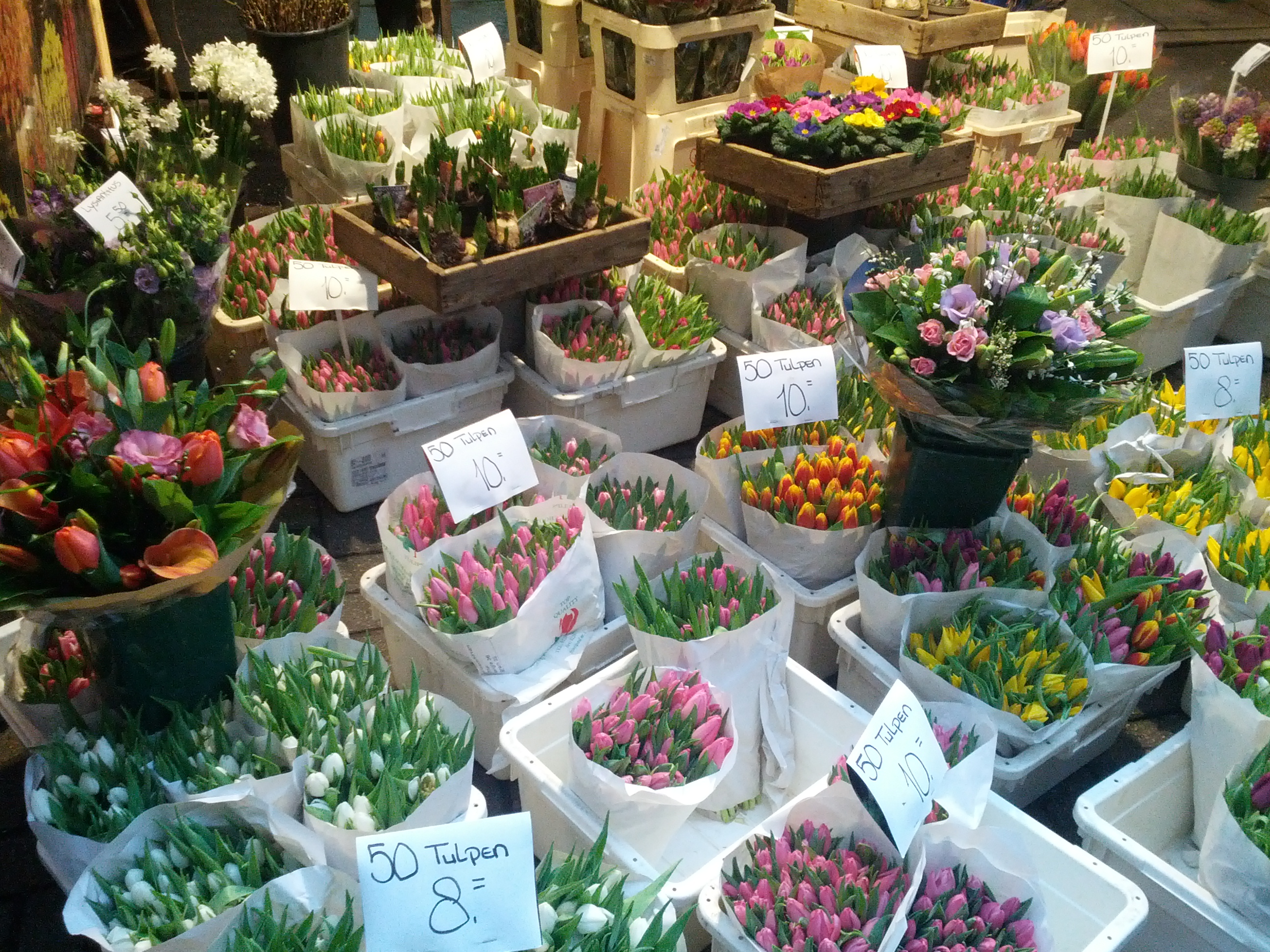
Time moves through the jungle, and we swing between vines, focusing on the flowers. I wish you all flowers.

Flower market in Amsterdam

Flower market in Amsterdam