The awkwardness of it

I recently remembered a particularly awkward moment.

This year marks 30 years of my continuous work in research, and I’ve been feeling a bit nostalgic about the journey. My career began with a summer job in an fMRI lab in 1996 and continued across settings, sectors and methods, comprising an adventure driven by a deep love of the work and gratitude for the people who help make it possible.

I spent nearly half of my career in an office environment that scarcely exists anymore, where my coworkers felt like family friends, my kids attended daycare onsite, and my colleagues and I had time to talk and catch up every day while still doing the work we knew deeply.  There, I had a lot of rambunctious fun with my colleagues, met my “work-wife,” and genuinely tried to learn how to walk in heels. 

But I also used my time there as a stepping stone; attending graduate school part-time, growing this blog and two kids, and serving on two AAPOR task forces while managing multiple studies. I became an expert in measuring employment outcomes, surveying high school teachers, measuring organizational climate, P- Stat and Unix, Multilingual, Multicultural and Multinational research, analyzing open-ended survey responses, and social media analysis. The extra effort led to a position at a large research company that was a real culture shock for me. In the office where I had spent most of my career, we worked hard and had a great time together. The new environment felt relentless by contrast, although I loved the work.

My new boss was someone I had come to know, respect, and genuinely like through our shared AAPOR activities. When she came to town, I was looking forward to our first lunch together as coworkers. But boyyyyy did I screw it up! I chose a nice vegan restaurant that was a little too far out of pocket and proceeded to get lost on my way back to the office. This was a company where meetings occurred nonstop on the half hour during business hours, and the reverberations from my wrong turn(s?) were significant. I couldn’t have felt more embarrassed.

Why tell this devastating story? Because it speaks to something innately relatable, a common fear we share about being out of our element. And being an entrepreneur involves a whole lot of being out of my element. 

I am proud of the company I’ve built. I’m proud of what it stands for and represents. I’m proud of what it does. I believe in its potential. I believe in the direction we are headed in and the changes underway to make the next big pivot happen. Being a business owner involves a lot of adapting, and my understanding of what we are and what we can be is clearer each day. Some of the work I love. Some I’m good at. And some involves me staring down my own weaknesses and shortcomings.

I have often compared being an entrepreneur to being one of those pop-up punching bag clowns that gets hit and bounces back with a silly smile pasted on my face. A business coach recently used better words, saying we all have to be a little witchy and magical to make something where there was nothing. I’ve called it world-building. I’ve compared it to being in a desert searching for water, but stubbornly of my own accord. I’ve talked about the roller coaster of ups and downs and highs and lows each day. It’s a lot of things. It’s all this and more. It’s not for everyone, but I choose it. It’s right for me.

But a part of me is back in that car, obsessing over a GPS device and an ETA, while driving through tree-lined country roads in autumn, forgetting to trust the wind and notice the color. I’ll own that. It’s part of the journey as much as obsessing over the maps and pulling over to actually get a good look at the view.

There are so many of us on this road who are at points in our careers where we expected everything to come easily. We thought the roads would be paved or our feet would be knowledgeable enough not to notice. But may our paths be lined with something greater. In the words of Pema Chodron, “To be fully alive, fully human, and completely awake is to be continually thrown out of the nest.” May this day, this chapter, this walk through vines and rubbish, this drive through unmarked roads be our gift.
Another world is quietly awakening

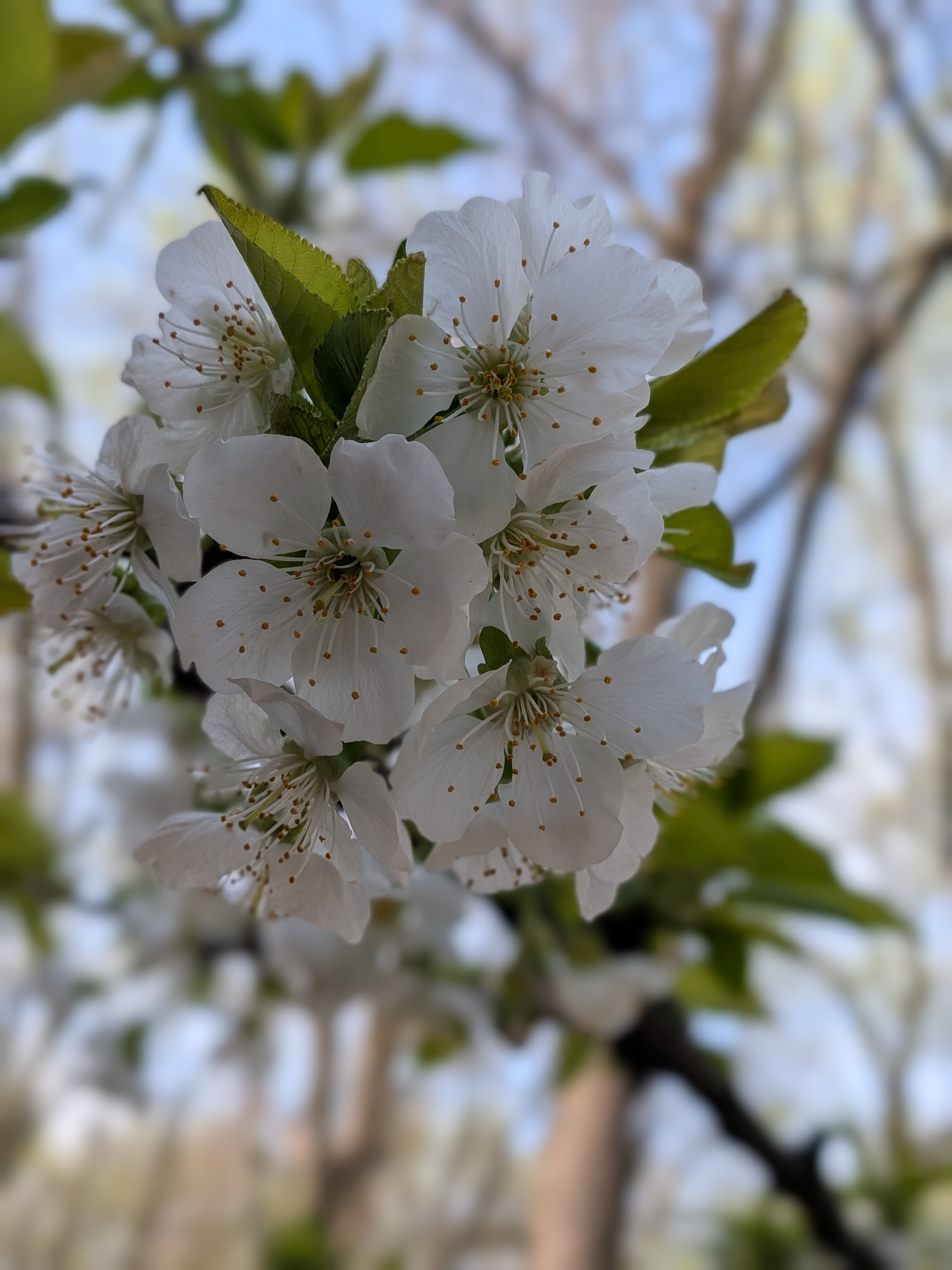
It’s cherry blossom season in the DMV (Washington DC-MD-VA), and these blossoms are a metaphor for the moment. There is a flourishing and supportive entrepreneurial community in the area that has the fertile soil needed to grow and blossom, and the people feeding the soil are steeped in mission-driven service ethics, technical and policy-driven mindsets, and the hunger to create something new from the ashes of what was burned down.

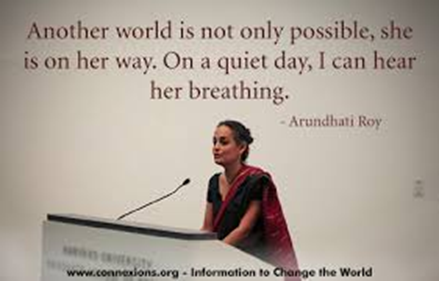
Quote from Arundhati Roy, ""Another World is not only possible, she is on her way. On a quiet day, I can hear her breathing.

I recently graduated from the inaugural entrepreneurial cohort of Founders Rising, a business incubator for former/endangered Federal workers and contractors who are in the early stages of founding businesses, sponsored by the Maryland Women’s Business Center. The program gave me a window into many key aspects of running a business and curated some very important connections.

The final pitch competition was profound for me in a surprising way. When I entered the event, I found many women I had connected with over the past year across many contexts: fellow entrepreneurs, other members of the cohort, people I’d met through networking events, and others involved in supporting the out-of-work community. As I walked through the room, I found myself tearfully hugging many women, and I felt the power of many worlds colliding; and it struck me that I did not know a single one of these women a year ago.

As a researcher with a 30-year career, I am used to this type of joyful reunion and genuine connections within the professional research community. But it was mind-blowing to have reached this level of familiarity and care in a single year with an entirely different group. I’m repeatedly struck by the importance of these genuine connections in my professional life. I haven’t ever done it alone.

This is the warmth and sunshine.

After the darkest winter, the cherry blossoms are blooming forth in our area, and I’m struck that we are all cherry blossoms, sharing branches, soil and sun as we bloom against all odds.

Picture of cherry blossoms

The many flourishing entrepreneurial support organizations, business and nonprofit incubators, networking groups, organizations and events provide the soil for us to grow and help us develop the structure we need to flourish.

Something powerful is happening here. It’s still in the early stages, but I’m listening, present, and very excited to be a part of it.

I launched my own LLC in late December, The Community Stories and Conversation Project, LLC, built with the intention of reimaging research as a community resource. Our logo and foundation include the cherry blossoms. The LLC hosts the TCSCP (pronounced “Talk Soup”) Network for independent researchers and research entrepreneurs. We began with 20 founding members, and in our first 3 months, we have doubled in membership, become profitable beyond expectations, launched an internal Lunch and Learn series and, most importantly, begun to bring work to independent researchers.

Logo of the Community Stories and Conversation Project

The Network functions as an easy one-stop shop for those looking for researchers to work with. In addition to traditional research clients, we support small businesses and entrepreneurs, making research services available to new types of clients who could not engage a larger research organization. We are looking to build strategic partnerships that bring steady sources of work to our members, such as partnerships with tech ESOs supporting emerging tech entrepreneurs who would benefit greatly from having an accessible stream of user-testing researchers, or those looking to build new pipelines and connections between communities and community organizations and funding sources.

logo of the TCSCP or "Talk Soup" Network

You are welcome, of course, to be a part of our movement. Join the network as a researcher, collaborate with us, support our efforts or partner with us to help build something powerful and uniquely ours.

Yesterday was the anniversary of the April Fools’ HHS layoffs that affected many of my clients and set in motion the largest career shift of my life after nearly 30 stable years of working in the research industry. I gathered with other former feds and contractors through a WellFed happy hour, and I left feeling proud of the myriad ways in which people had reinvented themselves.

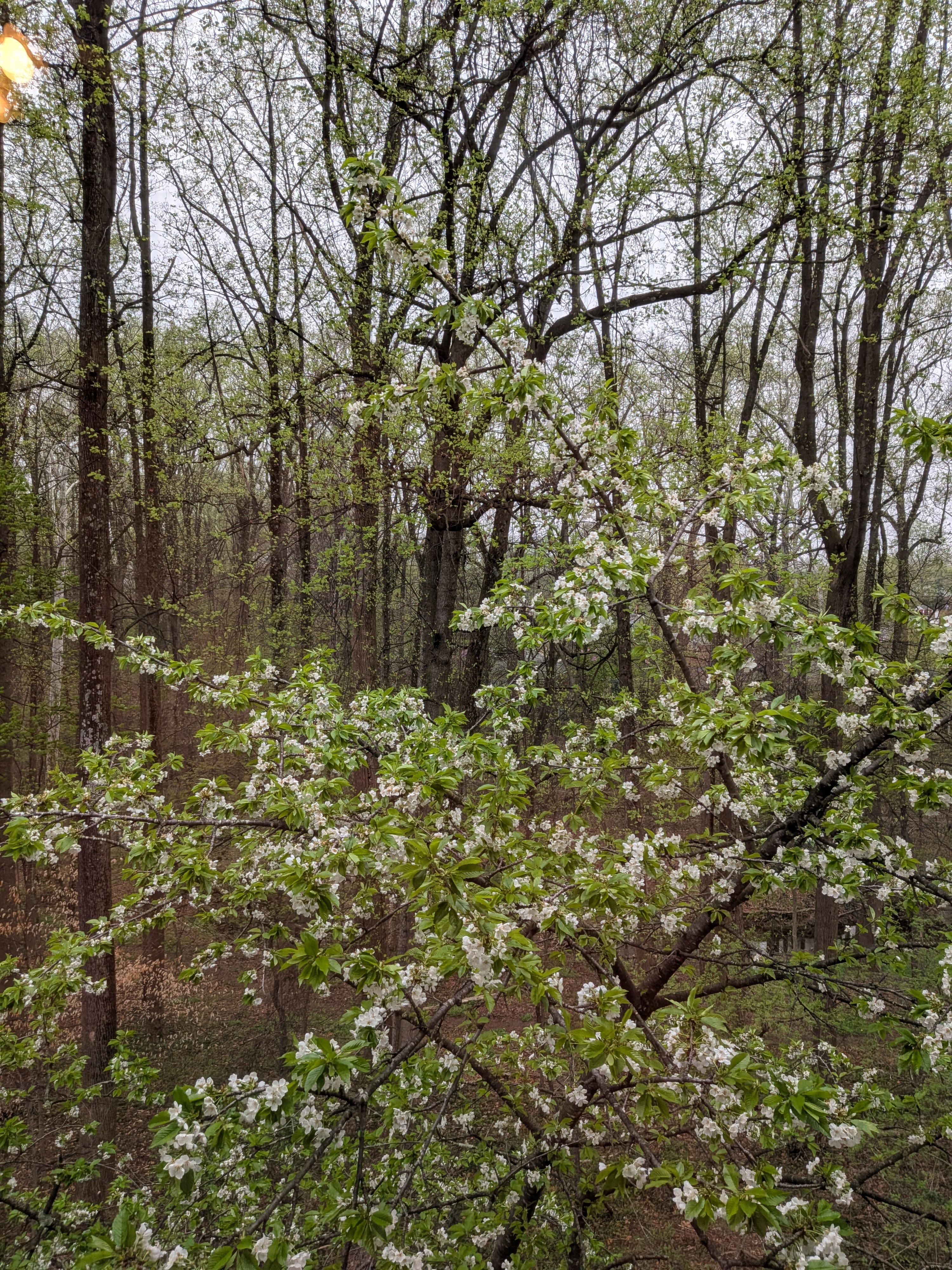
When I awoke, the blossoms on the cherry tree in my yard had turned mostly green, preparing to bear fruit, and the forest behind the tree had continued to spring back to life. I can’t tell you about the harvest or the summer, but I can tell you that what I feel is hope and a palpable anticipation of whatever is to come.

World-building, big news and cherry blossoms

Something big has happened since my last blog post! In December 2025, I transitioned from the World Building phase of business development to launching my business. Welcome to the Community Stories and Conversation Project (TCSCP)! We host the TCSCP (pronounced “Talk Soup”) Network, which is both a supportive collaboration hub for independent researchers and a one-stop shop for people looking to engage research services. This network represents a shift in the accessibility of research services and a space with great potential to empower and support individual researchers and small businesses. I could not be more proud!

The network launched with the help of our twenty founding members, ensuring from its onset that it has some of the best minds in the business coming together to collaborate in our changing field, and we have been gaining members and collecting requests for services since our launch. We offer a wide range of services, including:

 • surveys • data analysis • focus groups • program evaluation •

 • data dashboards and strategy • project management •

• social media analysis • spreadsheet assistance • participant recruitment •

• proposal assistance • translation, adaptation, and translation evaluation •

• employee and customer satisfaction • market research and strategy •

• web usability ui/ux studies •

• multilingual, multicultural, and multinational •

 • leadership, training, mentorship, and coaching •

Please take some time to stop by our website, learn more about the network, join or request services, support us at Buy Me a Coffee, or have a conversation with me about the network.

We have survived so much in the last several years. This effort is part of a new era of growth, like cherry blossoms bursting forth after a cold winter. This is something to believe in. Together we will help shape the future of the research industry!

Endings, transitions and beginnings

This year has been one of heavy contradictions for me. It brought an end to 30 consecutive years of working in research in a structured 9-to-5 environment in offices or remotely for organizations, but it also brought so many unexpected opportunities and new beginnings. 

At the outset of the year, as my industry came under increasing threats of rapid cuts and dramatic changes, I was hungry to use my skills and life experiences in a different kind of way to affect those who were caught under the wheels of the rapid federal changes. A plan for a community conversation series seemed almost delivered to me through a series of flashbacks and revelations during an intense two-week period. Shortly afterward, I began developing partnerships and hosting these cathartic events. When I lost my job as a federal contractor amidst another flurry of cuts to contracts and personnel (the “April Fools RIFs to HHS), I was able to devote more time to the series.

These Community Conversation events provided a space for difficult conversations around the impact of the cuts and changes, as well as a way to learn and practice grounding techniques for managing anxiety, hold empowering discussions reenvisioning the support landscape for those affected, and share in soothing meditations. We left these spaces feeling heard, better connected, and more relaxed and restored.

Early in this journey, I was interviewed by another community advocate.

https://www.youtube.com/embed/hJKpDYUbPt0?si=YZpizdPYm73jgwk-

By the end of November, I had conducted 15 Community Conversation events and three other career transition events, including a Careerchangeapalooza that proudly featured Career Change guru Rishan Mohammed of HiringCoach.ai. Some of the Community Conversations evolved into a youth-driven theme of Multigenerational Conversations about Mental Health and Wellness, and one event was more of a large-scale discussion forum with 10 breakout rooms. I led these events through partnerships with Transfiguration Parish, DC-AAPOR, AAPOR, and The Salt Sanctuary of MD, and as self-hosted events at local libraries and online. This work led to other opportunities I never would have imagined: co-leading a peer support group with a former FDA client, leading a weekly meditation series with the Salt Sanctuary and partnering with Brook Grove Retirement Community, where my daughter and I led weekly meditations, imagination sessions, and focus groups, and held countless conversations with residents and those in the rehab facility.

This was also a time for pro bono work, as I led and contributed to several qualitative studies in service of various partnerships and helped to prepare a statewide listening campaign on behalf of a consortium of local community advocate groups.

I felt deeply connected to my research and professional communities throughout this time. I joined MAFN, which turned out to be an amazingly supportive professional community, from monthly in-person networking events to online communities of practice. I joined the MRX PROs, with weekly sessions, discussion and camaraderie. I participated in AAPOR and DC-AAPOR events and attended the AAPOR conference with the help of colleagues. I learned more about the job-hunting landscape through the Insights Career Network. I met with countless peers in one-on-one networking sessions, learning about the passions and challenges of my colleagues and envisioning future collaborations. All of this happened against the backdrop of my unemployment. This morning marked the end of an era for me, as I attended my last mandatory unemployment session.

This period also led to something new and quite exciting! In September, I founded an LLC that is set to launch next week!

The coming year will be different. Some of these partnerships and Community Conversation events will continue, and a couple of new partnerships are on the horizon. The business will bloom and grow as a collective, and I’ll grow as a business owner through a business incubator program called Founders Rising!, and I’ll trade pro-bono work for paid consulting work. But this new year will be built on the foundation of a creative, supportive, challenging and transformational time unparalleled in my professional career. I’ve shared tears and laughs and intellectual excitement and so much more with my community members, colleagues, and friends and family this year, and more than anything, I feel so much gratitude to be at this particular point.

The COVID pandemic and lockdown brought another transformational period for so many of us, and we are still reckoning with its aftermath. The aftermath of this year will also linger. But may we continue to build on this new foundation to elevate each other through whatever challenges come our way in the future, stronger- as always, together!

Where the magic happens

The key to getting things done is doing them on your own terms.

This is a motto of mine; words I live by. A commute can be a pain, but what if I left a little earlier, took the scenic route, drank some good coffee and listened to a good book on the way? Dishes can be a pia, but with music? What if I focus on the bubbles?

As a researcher, I am often motivated by the power of noticing. As a moderator, this means providing space for the quietest voices to blossom. As an analyst, this means taking the time and care to represent all of the voices, not just the loudest or most eloquent.

I’ve often taken pride in my invisibility as a facilitator. I feel like I’ve done my job when I’m barely noticed, but the tone is set, the participants are at ease and the conversation stays on track through the subtlest of prompts and cues.

Today I’m kayaking. I enjoy racing through the water, but when I stop, I see birds hidden in tall grass, fish jumping, and the almost magical pops of light reflecting on water and trees.

My community work has also followed this model; amplifying quiet voices, endorsing those who seem tentative but I know to be insightful. Noticing.

This is my way of working, living and interacting in the world, and this is what drives me to do the work I’m doing now.

I have a voice that I have never hesitated to use. But I’ve learned that the world comes alive around me when I choose to observe. I trust that the same voice I use to advocate for others is well practiced and fully available when I need it, and with that trust I can fade back.

I’m in a transformative moment. I’m deciding what I want to build and that requires repeatedly doubling back to my principles. What do I stand for? What do I provide as naturally as I breathe or paddle? Who am I without institutional backing, when I’m free to create?

There is a large exodus in my field; people who have lost jobs and are beginning consultancies. For some, the path may feel more clear than for others. How can we support each other better? Connect more? Collaborate more? Grow stronger together? Are we all adrift? Could we paddle together?

When I finished my paddle today, I pulled onto shore and a park employee greeted me. I saw poop on both sides of the kayak and tried to point it out to her. She didn’t see me or hear me. She appeared to have already decided my words didn’t merit her attention. ‘Watch where you step!” I shouted, after a few attempts, and then watched her croc’d foot come down in a large pile of poop. In this world of paddlers, where we all sit under the same blanket of sky and listen to the sounds of birds that live freely amongst and between us, I choose to listen, to observe, to hear, to find pockets of magic and to step in poop as little as possible.

The Role of Gratitude in Research

Research, as most things in life, is best approached with gratitude. In this post, I’ll share a bit about what I’m grateful for, an exercise in gratitude, and some food for thought about the role of gratitude in research.

First, here is a window into what I’m feeling grateful for.

Grateful for the challenge of research

Research can provide a challenging career. While it is possible to find positions in research that are more repetitive, most positions afford many opportunities for learning about new subject matter and new methods. Each new research question provides fresh challenges to implement. And with the body of literature and informal sources available, there is always the ability to read more deeply about the work that others have done. I am grateful for the perpetual learning experiences that research has brought.

Grateful for the versatility of research

One of my favorite aspects of a career in research is the versatility. I’ve been able to work in neuropsychology, physics education, sociolinguistics, social media research, media measurement and in public health using a great variety of research methods.

Grateful for my colleagues

Over the years I’ve had the pleasure of working with people that I respect, learn from and genuinely enjoy. I’m grateful for their help, their wisdom, their curiosity, their enthusiasm, their support, their friendship, and their comforting awkwardness.

Gratitude for the research opportunities

I am grateful for the opportunity to study people. I am grateful for the people who agree to participate in research and who honestly share what is in their hearts or on their minds. Some opinions and experiences are easier to share than others. I am grateful for all of it. The qualitative work that I am currently involved with is often built on individual and group interviews that can be a powerful experience for the participant and the interviewer, and I am so grateful to the participants and the process for bringing this to fruition.


Now, let’s take a minute to Go Beyond the Gush. It is easy to get swept up in the everyday grind of research, whether because the research approval process seems unnecessarily repetitive or cumbersome, or data needs more wrangling than predicted, or the meetings seem endless and the emails, texts and phone calls seem constant, or the people working on a project are particularly difficult to corral, or the behavior that you need to observe in your research is particularly difficult to isolate, or… We can all get caught in the slog of research. But gratitude can help.

Here is an exercise:

Let’s take a minute to get very basic with this. First, think of the reasons why you enjoy your work. Then let’s take it back even further.

  • Be grateful to have a topic to research or to have the ability to find one. Be grateful for the ability to be curious and to find unanswered questions.
  • Be grateful to have the support to pursue this topic as a professional or as a student. Research costs time, money and many other resources.
  • Be grateful to have the skills to approach the topic. Think of all of the training that provided these skills. Think of the resources that are available to you to help you learn what you need.
  • Be grateful for your strength. You have the ability to tackle what comes your way.
  • Be grateful for the people who must come together to make this work happen. Sometimes we get stuck thinking of one person’s habits or quirks or in finding fault with the people around us. Some groups are more cohesive than others, and each person brings a different set of skills. Take a step back from that. Let go of it for a minute and take a fresh look. First see yourself as someone with strengths and weaknesses. Then see your colleagues in this light as well. Allow yourself to forgive yourself and others.
  • Be grateful for the challenges your work brings. Sometimes it seems to bring too many challenges. But those challenges are keeping you sharp. And in some way, they will offer you the opportunity to learn and grow.
  • Be grateful for research participants. These are the people who make our work possible by letting us into their world in some way. That is a privilege.


What do exercises like this gain you? A few things, really. Peace of mind. A break from the stress and an opportunity to just feel grateful. Perspective. A chance to put challenges that seem constant or insurmountable into a smaller box. The opportunity to see the people around us from a fresh perspective and hear them more clearly. A better insulation against the instability that affects us all. And an opportunity to see our research in context and think more broadly about the affect it has. The work we do affects peoples’ lives, but these basic mechanisms can become lost to us when we lose perspective. With fresh perspective and gratitude, we can better see these mechanisms in action and produce work that better respects all involved. No research exists in a vacuum, and the better we can understand the role our research plays in a wider context the better stewards we can be over this tremendous privilege we’ve been granted.

Thanks for listening.

The surprising unpredictability of language in use

This morning I recieved an e-mail from an international professional association that I belong to. The e-mail was in English, but it was not written by an American. As a linguist, I recognized the differences in formality and word use as signs that the person who wrote the e-mail is speaking from a set of experiences with English that differ from my own. Nothing in the e-mail was grammatically incorrect (although as a linguist I am hesitant to judge any linguistic differences as correct or incorrect, especially out of context).

Then later this afternoon I saw a tweet from Twitter on the correct use of Twitter abbreviations (RT, MT, etc.). If the growth of new Twitter users has indeed leveled off then Twitter is lucky, because the more Twitter grows the less they will be able to influence the language use of their base.

Language is a living entity that grows, evolves and takes shape based on individual experiences and individual perceptions of language use. If you think carefully about your experiences with language learning, you will quickly see that single exposures and dictionary definitions teach you little, but repeated viewings across contexts teach you much more about language.

Language use is patterned. Every word combination has a likelihood of appearing together, and that likelihood varies based on a host of contextual factors. Language use is complex. We use words in a variety of ways across a variety of contexts. These facts make language interesting, but they also obscure language use from casual understanding. The complicated nature of language in use interferes with analysts who build assumptions about language into their research strategies without realizing that their assumptions would not stand up to careful observation or study.

I would advise anyone involved in the study of language use (either as a primary or secondary aspect of their analysis) to take language use seriously. Fortunately, linguistics is fun and language is everywhere. So hop to it!

Reporting on the AAPOR 69th national conference in Anaheim #aapor

Last week AAPOR held it’s 69th annual conference in sunny (and hot) Anaheim California.

Palm Trees in the conference center area

My biggest takeaway from this year’s conference is that AAPOR is a very healthy organization. AAPOR attendees were genuinely happy to be at the conference, enthusiastic about AAPOR and excited about the conference material. Many participants consider AAPOR their intellectual and professional home base and really relished the opportunity to be around kindred spirits (often socially awkward professionals who are genuinely excited about our niche). All of the presentations I saw firsthand or heard about were solid and dense, and the presenters were excited about their work and their findings. Membership, conference attendance, journal and conference submissions and volunteer participation are all quite strong.


At this point in time, the field of survey research is encountering a set of challenges. Nonresponse is a growing challenge, and other forms of data and analysis are increasingly en vogue. I was really excited to see that AAPOR members are greeting these challenges and others head on. For this particular write-up, I will focus on these two challenges. I hope that others will address some of the other main conference themes and add their notes and resources to those I’ve gathered below.


As survey nonresponse becomes more of a challenge, survey researchers are moving from traditional measures of response quality (e.g. response rates) to newer measures (e.g. nonresponse bias). Researchers are increasingly anchoring their discussions about survey quality within the Total Survey Error framework, which offers a contextual basis for understanding the problem more deeply. Instead of focusing on an across the board rise in response rates, researchers are strategizing their resources with the goal of reducing response bias. This includes understanding response propensity (who is likely not to respond to the survey? Who is most likely to drop out of a panel study? What are some of the barriers to survey participation?), looking for substantive measures that correlate with response propensity (e.g. Are small, rural private schools less likely to respond to a school survey? Are substance users less likely to respond to a survey about substance abuse?), and continuous monitoring of paradata during the collection period (e.g. developing differential strategies by disposition code, focusing the most successful interviewers on the most reluctant cases, or concentrating collection strategies where they are expected to be most effective). This area of strategizing emerged in AAPOR circles a few years ago with discussions of nonresponse propensity modeling, a process which is surely much more accessible than it sounds, but it has really evolved into a practical and useful tool that can help any size research shop increase survey quality and lower costs.


Another big takeaway for me was the volume of discussions and presentations that spoke to the fast-emerging world of data science and big data. Many people spoke of the importance of our voice in the realm of data science, particularly with our professional focus on understanding and mitigating errors in the research process. A few practitioners applied error frameworks to analyses of organic data, and some talks were based on analyses of organic data. This year AAPOR also sponsored a research hack to investigate the potential for Instagram as a research tool for Feed the Hungry. These discussions, presentations and activities made it clear that AAPOR will continue to have a strong voice in the changing research environment, and the task force reports and initiatives from both the membership and education committees reinforced AAPOR’s ability to be right on top of the many changes afoot. I’m eager to see AAPOR’s changing role take shape.

“If you had asked social scientists even 20 years ago what powers they dreamed of acquiring, they might have cited the capacity to track the behaviors, purchases, movements, interactions, and thoughts of whole cities of people, in real time.” – N.A.  Christakis. 24 June 2011. New York Times, via Craig Hill (RTI)


AAPOR a very strong, well-loved organization and it is building a very strong future from a very solid foundation.


2014-05-16 15.38.17


MORE DETAILED NOTES:

This conference is huge, so I could not possibly cover all of it on my own, so I will try to share my notes as well as the notes and resources I can collect from other attendees. If you have any materials to share, please send them to me! The more information I am able to collect here, the better a resource it will be for people interested in the AAPOR or the conference-


Patrick Ruffini assembled the tweets from the conference into this storify


Annie, the blogger behind LoveStats, had quite a few posts from the conference. I sat on a panel with Annie on the role of blogs in public opinion research (organized by Joe Murphy for the 68th annual AAPOR conference), and Annie blew me away by live-blogging the event from the stage! Clearly, she is the fastest blogger in the West and the East! Her posts from Anaheim included:

Your Significance Test Proves Nothing

Do panel companies manage their panels?

Gender bias among AAPOR presenters

What I hate about you AAPOR

How to correct scale distribution errors

What I like about you AAPOR

I poo poo on your significance tests

When is survey burden the fault of the responders?

How many survey contacts is enough?


My full notes are available here (please excuse any formatting irregularities). Unfortunately, they are not as extensive as I would have liked, because wifi and power were in short supply. I also wish I had settled into a better seat and covered some of the talks in greater detail, including Don Dillman’s talk, which was a real highlights of the conference!

I believe Rob Santos’ professional address will be available for viewing or listening soon, if it is not already available. He is a very eloquent speaker, and he made some really great points, so this will be well worth your time.


Let’s talk about data cleaning

Data cleaning has a bad rep. In fact, it has long been considered the grunt work of the data analysis enterprise. I recently came across a piece of writing in the Harvard Business Review that lamented the amount of time data scientists spend cleaning their data. The author feared that data scientists’ skills were being wasted on the cleaning process when they could be using their time for the analyses we so desperately need them to do.

I’ll admit that I haven’t always loved the process of cleaning data. But my view of the process has evolved significantly over the last few years.

As a survey researcher, my cleaning process used to begin with a tall stack of paper forms. Answers that did not make logical sense during the checking process sparked a trip to the file folders to find the form in question. The forms often held physical evidence of a indecision on the part of the respondent, such as eraser marks or an explanation in the margin, which could not have been reflected properly by the data entry person. We lost this part of the process when we moved to web surveys. It sometimes felt like a web survey left the respondent no way to communicate with the researcher about their unique situations. Data cleaning lost its personalized feel and detective story luster and became routine and tedious.

Despite some of the affordances of the movement to web surveys, much of the cleaning process stayed routed in the old techniques. Each form has its own id number, and the programmers would use those id numbers for corrections

if id=1234567, set var1=5, set var7=62

At this point a “good programmer” would also document the changes for future collaborators

*this person was not actually a forest ranger, and they were born in 1962
if id=1234567, set var1=5, set var7=62

Making these changes grew tedious very quickly, and the process seemed to drag on for ages. The researcher would check the data for a potential errors, scour the records that could hold those errors for any kind of evidence of the respondent’s intentions, and then handle each form one at a time.

My techniques for cleaning data have changed dramatically since those days. My goal is to use id numbers as rarely as possible, but instead to ask myself questions like “how can I tell that these people are not forest rangers?” The answer to these questions evokes a subtley different technique:

* these people are not actually forest rangers
if var7=35 and var1=2 and var10 contains ‘fire fighter’, set var1=5)

This technique requires honing and testing (adjusting the precision and recall), but I’ve found it to be far more efficient, faster, more comprehensive and, most of all- more fun (oh hallelujah!). It makes me wonder whether we have perpetually undercut the quality of the data cleaning we do simply because we hold the process in such low esteem.

So far I have not discussed data cleaning for other types of data. I’m currently working on a corpus of Twitter data, and I don’t see much of a difference in the cleaning process. The data types and programming statements I use are different, but the process is very close. It’s an interesting and challenging process that involves detective work, a better and growing understanding of the intricacies of the dataset, a growing set of programming skills, and a growing understanding of the natural language use in your dataset. The process mirrors the analysis to such a degree that I’m not really sure why it would be such a bad thing for analysts to be involved in data cleaning.

I’d be interested to hear what my readers have to say about this. Is our notion of the value and challenge of data cleaning antiquated? Is data cleaning a burden that an analyst should bear? And why is there so little talk about data cleaning, when we could all stand to learn so much from each other in the way of data structuring code and more?

Professional Identity: Who am I? And who are you?

Last night I acted as a mentor at the annual Career Exploration Expo sponsored by my graduate program. Many of the students had questions about developing a professional identity. This makes sense, of course, because graduate school is an important time for discovering and developing a professional identity.

People enter our program (and many others) With a wide variety of backgrounds and interests. They choose from a variety of classes that fit their interests and goals. And then they try to map their experience onto job categories. But boxes are difficult to climb into and out of, and students soon discover that none of the boxes is a perfect fit.

I experienced this myself. I entered the program with an extensive and unquestioned background in survey research. Early in my college years (while I was studying and working in neuropsychology) I began to manage a clinical dataset in SPSS. Working with patients and patient files was very interesting, but to my surprise working with data using statistical software felt right to me much in the way that Ethiopian meals include injera and Japanese meals include rice (IC 2006 (1997) Ohnuki Tierney Emiko). I was actually teased by my friends about my love of data! This affinity served me well, and I enjoyed working with a variety of data sets while moving across fields and statistical programming languages.

But my graduate program blew my mind. I felt like I had spent my life underwater and then discovered the sky and continents. I discovered many new kinds of data and analytic strategies, all of which were challenging and rewarding. These discoveries inspired me to start this blog and have inspired me to attend a wide variety of events and read some very interesting work that I never would have discovered on my own. Hopefully followers of this blog have enjoyed this journey as much as I have!

As a recent graduate, I sometimes feel torn between worlds. I still work as a survey researcher, but I’m inspired by research methods that are beyond the scope of my regular work. Another recent graduate of our program who is involved in market research framed her strategy in a way that really resonated with me: “I give my customers what they want and something else, and they grow to appreciate the ‘something else.'” That sums up my current strategy. I do the survey management and analysis that is expected of me in a timely, high quality way. But I am also using my newly acquired knowledge to incorporate text analysis into our data cleaning process in order to streamline it, increasing both the speed and the quality of the process and making it better equipped to handle the data from future surveys. I do the traditional quantitative analyses, but I supplement them  with analyses of the open ended responses that use more flexible text analytic strategies. These analyses spark more quantitative analyses and make for much better (richer, more readable and more inspired) reports.

Our goal as professionals should be to find a professional identity that best capitalizes on  our unique knowledge, skills and abilities. There is only one professional identity that does all of that, and it is the one you have already chosen and continue to choose every day. We are faced with countless choices about what classes to take, what to read, what to attend, what to become involved in, and what to prioritize, and we make countless assessments about each. Was it worthwhile? Did I enjoy it? Would I do it again? Each of these choices constitutes your own unique professional self, a self which you are continually manufacturing. You are composed of your past, your present, and your future, and your future will undoubtedly be a continuation of your past and present. The best career coach you have is inside of you.

Now your professional identity is much more uniquely or narrowly focused that the generic titles and fields that you see in the professional marketplace. Keep in mind that each job listing that you see represents a set of needs that a particular organization has. Is this a set of needs that you are ready to fill? Is this a set of needs that you would like to fill? You are the only one who knows the answers to these questions.

Because it turns out that you are your best career coach, and you have been all along.